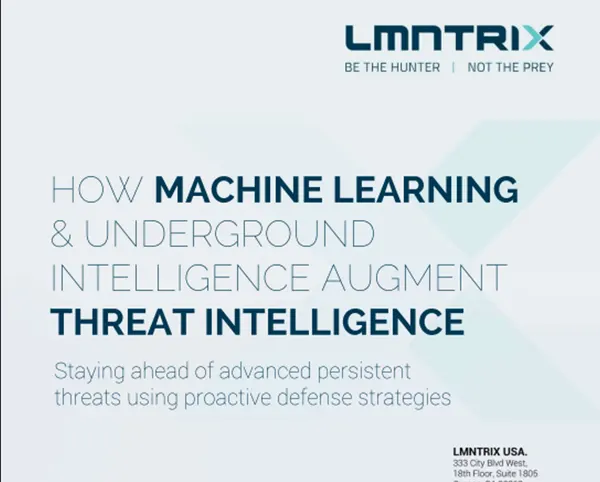
How Machine Learning & Underground Intel Augment Threat Intelligence
Cybersecurity is an ongoing battle of wits: defenders implement controls, adversaries adapt, and the cycle repeats. To stay ahead, organizations must move beyond static indicators and adopt an intelligence approach that is dynamic, predictive, and deeply contextual.
This white paper explores how augmented threat intelligence—the combination of machine learning, underground/dark-web intelligence, and established threat intelligence practices—enables SOCs and security teams to detect, prioritize, and respond to threats with far greater speed and accuracy. It shows how LMNTRIX integrates these capabilities into our XDR platform to deliver proactive defense.
The four types of threat intelligence (strategic, operational, tactical, technical) and how each supports your defense strategy.
A walkthrough of the threat intelligence lifecycle—discovery, collection, processing, analysis, reporting, and review.
How dark-web intelligence surfaces credentials, exploits, and attacker chatter long before traditional sources.
The role of machine learning in transforming noisy, low-quality feeds into structured, actionable insights.
Best practices for integrating intelligence with SIEM/XDR workflows to automate triage and enhance detection.
Key performance indicators (KPIs) you can use to measure threat intelligence program effectiveness.
How to use ML + underground intel to reduce false positives/negatives and shrink time-to-detect.
Practical methods to prioritize alerts and align detection with attacker intent.
How to build resilience by anticipating attacker behaviours and adjusting controls proactively.
Why TI must integrate with your XDR or SIEM to deliver business impact, not just data.
A KPI framework to quantify success and continuously optimize your program
We use cookies to measure how the site is used and to make our advertising relevant. You can accept or reject them; essential cookies stay either way. See our Privacy Policy.
Press Enter to see everything we have on the topic.