- PlatformCore Detection & ResponseEDRAdvanced endpoint detection and response with deep visibility, autonomous containment, and analyst-driven investigationNDRNetwork detection and response powered by full packet capture, session reconstruction, and AI-driven anomaly detection.CloudUnified cloud protection across workloads, identities, and SaaS apps, combining visibility with runtime defense.MobileEndpoint security for iOS and Android, detecting malicious apps, phishing attempts, and device-level exploits.IoT/OTCritical asset visibility and threat detection for industrial and IoT environments—without downtime or blind spots.Human Threat Actor CoverageIntelligenceGlobal threat intelligence aggregated from 300+ sources, mapped to your environment for real-time detection and context.Attack ValidationAutomated adversarial validation to confirm detections, test controls, and prioritize real threats over noise.DeceiveDeception technology that lures attackers into decoy environments, revealing tactics before damage is done.IdentityIdentity threat detection and protection with real-time monitoring of Active Directory, Entra ID, and credentials.Post-Breach Forensics & IRPacketsFull-fidelity network forensics with packet capture, file extraction, and retrospective analysis.SIEMCentralized log management and correlation across all telemetry sources for complete security visibility.ReconContinuous adversarial exposure management—simulating attacker reconnaissance to surface hidden weaknesses.
- MDR
- Why LMNTRIX
- Active Defense
- Use CasesBusiness Use CasesReliable & Thorough CybersecurityElevate Security OperationsCross Product CorrelationTech Use CasesCloud Security SimplifiedOptimizing SIEM Security with Next-Gen Detection ToolsAchieve Excellence in Security OperationsComprehensive MITRE ATT&CK Coverage for All StagesEnvironment Use CasesMDR for AWS Cloud Security – 24/7 Detection & ResponseManaged Detection & Response for Google Cloud SecurityAdvanced Microsoft MDR Security for Threat Defense
- LMNTRIX vs the CompetitionLMNTRIX vs other vendorsvs. CrowdStrikeOverhyped, Overpriced & Always Breachedvs. SentinelOneLimited protection, unable to prevent breachesvs. MicrosoftComplex operations increase TCOvs. Palo Alto NetworksDifficult to implement, operate, & maintainvs. SophosOverpriced and Overcomplicatedvs. Trend MicroLimited to own ecosystem & threat of DevOps interruptionsvs. DarktraceOver-promises with flashy AI marketing but always under-deliversvs. other MDRsSlow MDRs that miss threats and leave you to fix the damage
- Ask LISA
White Paper
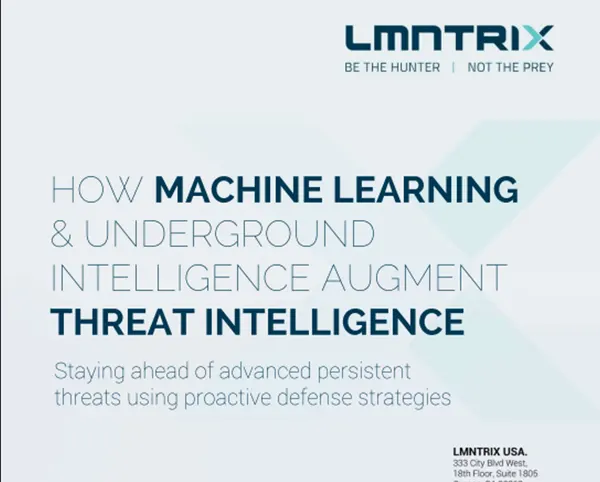
How Machine Learning & Underground Intel Augment Threat Intelligence
Cybersecurity is an ongoing battle of wits: defenders implement controls, adversaries adapt, and the cycle repeats. To stay ahead, organizations must move beyond static indicators and adopt an intelligence approach that is dynamic, predictive, and deeply contextual.
This white paper explores how augmented threat intelligence—the combination of machine learning, underground/dark-web intelligence, and established threat intelligence practices—enables SOCs and security teams to detect, prioritize, and respond to threats with far greater speed and accuracy. It shows how LMNTRIX integrates these capabilities into our XDR platform to deliver proactive defense.
- The four types of threat intelligence (strategic, operational, tactical, technical) and how each supports your defense strategy.
- A walkthrough of the threat intelligence lifecycle—discovery, collection, processing, analysis, reporting, and review.
- How dark-web intelligence surfaces credentials, exploits, and attacker chatter long before traditional sources.
- The role of machine learning in transforming noisy, low-quality feeds into structured, actionable insights.
- Best practices for integrating intelligence with SIEM/XDR workflows to automate triage and enhance detection.
- Key performance indicators (KPIs) you can use to measure threat intelligence program effectiveness.
- How to use ML + underground intel to reduce false positives/negatives and shrink time-to-detect.
- Practical methods to prioritize alerts and align detection with attacker intent.
- How to build resilience by anticipating attacker behaviours and adjusting controls proactively.
- Why TI must integrate with your XDR or SIEM to deliver business impact, not just data.
- A KPI framework to quantify success and continuously optimize your program