SOC_Modernization

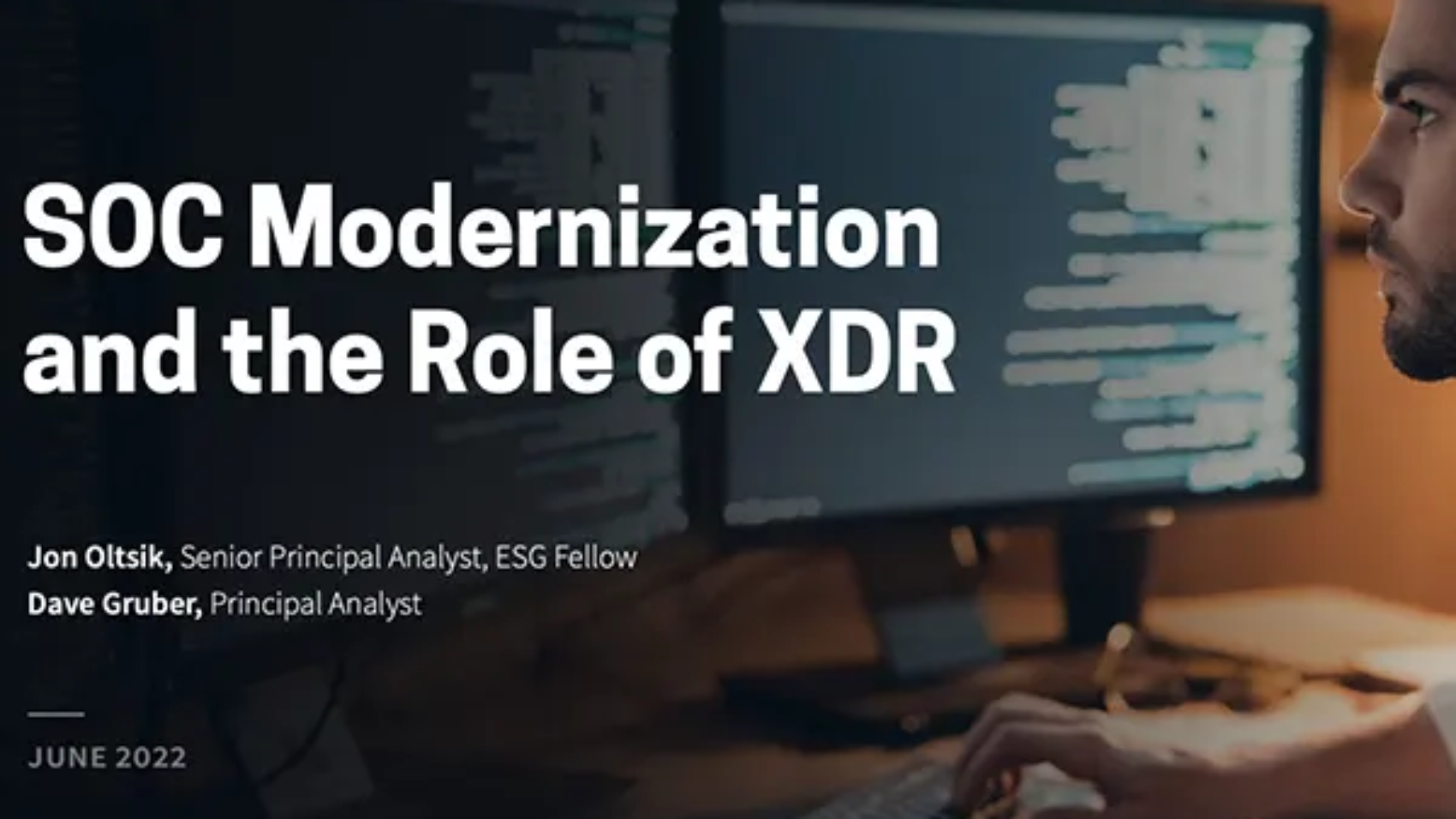
SOC Modernization and the Role of XDR

WHITE PAPER

SOC Modernization and the Role of XDR

Security operations demand massive scale to collect, process, analyze, and act upon massive amounts of data. Early XDR was anchored to two primary data sources: endpoints and networks. While this was an improvement on disconnected EDR and NDR tools, threat detection and response across enterprise organizations demands a wider aperture, including cloud workloads, threat intelligence feeds, SaaS applications, and identity and access management visibility. At the same time, in order to modernize security operations centers and keep up with the volume of security alerts, large organizations need advanced analytics to help automate tier-1 analyst tasks like triaging alerts, correlating alerts with IoCs, and preparing incidents for investigations.

In order to gain insights into these trends, ESG surveyed 376 IT and cybersecurity professionals at organizations in North America (US and Canada) personally responsible for evaluating, purchasing, and utilizing threat detection and response security products and services.

Download this guide to learn:

  • Examine the people, processes, and technology supporting the modernization of security operations.
  • Identify key value points, metrics required to back up those value points, and what’s expected from both products and managed services for XDR and SOC modernization.
  • Determine the current perception and role of XDR as a component of security operations modernization efforts.
  • Explore strategies used to automate triage, speed investigations, and help organizations find unknown threats.
augmented-threat-intel

How Machine Learning & Underground Intel Augment Threat Intelligence

WHITE PAPER

How Machine Learning & Underground Intel Augment Threat Intelligence

Cybersecurity is an ongoing battle of wits: defenders implement controls, adversaries adapt, and the cycle repeats. To stay ahead, organizations must move beyond static indicators and adopt an intelligence approach that is dynamic, predictive, and deeply contextual.

This white paper explores how augmented threat intelligence—the combination of machine learning, underground/dark-web intelligence, and established threat intelligence practices—enables SOCs and security teams to detect, prioritize, and respond to threats with far greater speed and accuracy. It shows how LMNTRIX integrates these capabilities into our XDR platform to deliver proactive defense.

Inside the White Paper

What You’ll Learn

cloud-sec-whitepaper

Securing The Cloud : A Comprehensive Guide to Cloud Computing & Security

WHITE PAPER

Securing The Cloud : A Comprehensive Guide to Cloud Computing & Security

Organizations using cloud services or in the process of migrating to a cloud-based solution for their business systems need awareness of the security implications of adopting the cloud for information processing.

This white paper explores the issues around implementing adequate security controls into cloud-based corporate systems and options for protecting these systems using security solutions. The aim is to help you determine your cyber security protection requirements for your cloud-based services and select the appropriate managed security solution for business needs.

Download this Cloud Security Whitepaper to learn:

  • Cloud Service Models
  • Cloud Security Tools
  • Cloud Security Posture Management (CSPM)
  • Cloud Infrastructure Entitlement Management (CIEM)
  • Cloud Detection & Response (CDR)
  • Cloud Security Challenges such as misconfiguration, poor authentication and security breaches
  • Cloud Security Controls, encompassing ISO/IEC and CSA Cloud Security Framework
  • Cloud Security Case Studies & Best Practices
  • And Much MORE…

Download Our Datasheet

identity-protect-whitepaper

Identity Protection In a Digital World: A Comprehensive Guide to Safeguarding Digital Identities & Active Directory

WHITE PAPER

Identity Protection In a Digital World: A Comprehensive Guide to Safeguarding Digital Identities & Active Directory

Traditional security controls struggle to detect compromises effectively, especially against sophisticated attackers who can emulate normal user behavior. To address this, organizations employ Identity Protection Solutions, integrating specialized processes with Identity and Access Management (IAM) and other security controls for comprehensive coverage.

Identity protection is essential due to the critical role digital identities play in managing resource access. The primary challenge lies in handling vast amounts of identity-related data and correlating it with indicators of compromise. By disrupting the attacker’s kill chain and detecting threats early, identity protection minimizes the impact of potential breaches.

The best practices in identity protection focus on secure authentication and session management, including multifactor authentication and comprehensive password policies. Risks associated with compromised digital identities include excessive permissions, stale accounts, misconfiguration, and vulnerability exploitation through various techniques like social engineering and malware attacks.

Download the Identity Protection Whitepaper to learn of:

  • Challenges for Identity Protection
  • Operational Focus of Identity Protection
  • Identity Threat Detection and Response
  • Identity Protection Risks that result in 80% of cloud breaches
  • How a single account compromise can lead to full fledged infrastructure access
  • Identity Protection Best Practices
  • Benefits of Identity Protection Solutions
  • Continuous monitoring and integration with IAM processes
  • And Much MORE…

Download Our Datasheet